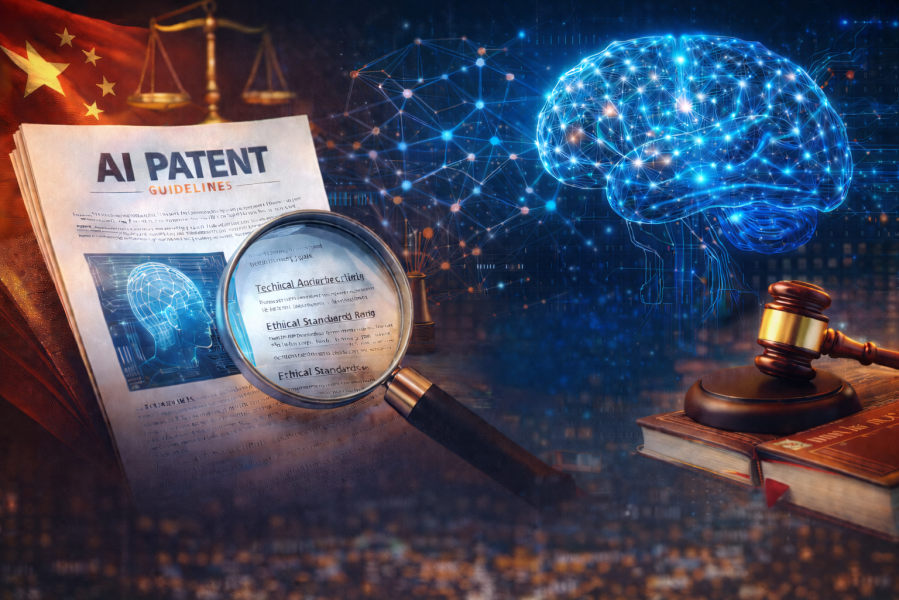
Revised patent examination guidelines have come into force in China, significantly tightening the requirements for inventions in the field of artificial intelligence. They make it clear that technical innovation is no longer sufficient for patenting. In the future, patentable AI solutions must also be legally permissible, ethically acceptable, and technically transparent.
Examiners place particular emphasis on the lawful use of data. AI systems that process personal or biometric information can only be patented if the application clearly demonstrates that the data collection and processing comply with applicable data protection regulations. Procedures that use facial recognition without clear consent, for example, are not considered protectable, even if they are technically sophisticated. Algorithmic decision-making models also reach their limits when they implicitly weigh human values or lives against each other and thus contradict fundamental social principles.
At the same time, the requirements for inventive contribution are increasing. Simply transferring known AI models to new fields of application is no longer sufficient. Only solutions in which a concrete technical advancement of the algorithm is recognizable and a real technical problem is solved in a new way are protectable. Substantial disclosure is equally important. Patent applications must clearly explain how the AI model is structured, how individual components interact, and why the claimed technical effect actually occurs. Pure black box descriptions or speculative cause-and-effect relationships will lead to rejection.
Overall, the new guidelines mark a strategic shift in the Chinese patent system. Quality, traceability, and social compatibility are becoming more important. For companies and developers, this means that patent strategies must take legal compliance, technical depth, and transparency into account at an early stage. Anyone who wants to protect AI innovation in China will have to deliver more than just a clever application in the future—resilient technology, clean data concepts, and clear explanations are what is needed.


 China Intellectual Property Blog