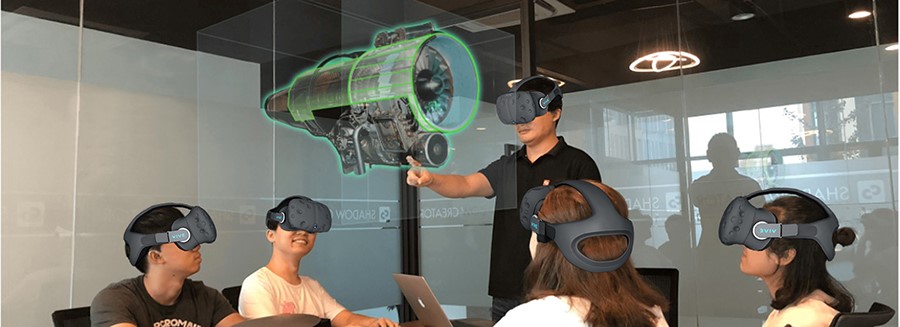
Shanghai is going on the offensive with the publication of the first national group standard for the metaverse. The measure is a clear indication that China does not view the metaverse as just a gimmick or niche market, but as a fundamental new infrastructure for the economy and society of the future. By combining standardized evaluation frameworks, targeted application promotion and cross-industry cooperation, the city is creating the conditions for the metaverse to develop in China in an orderly, rapid and, above all, user-oriented manner. This step could become a blueprint for other regions and shape global competition in the metaverse sector.
The metaverse, a collective term for immersive digital worlds created through virtual reality (VR), augmented reality (AR) and other technologies, is in a phase of rapid but uncoordinated development. Until now, there has been a lack of uniform definitions and quality standards. What exactly qualifies as a ‘metaverse product’ or ‘metaverse service’? How do you measure its technological maturity, its utility value or its economic value? This lack of clarity has hampered investment decisions, cooperation between companies and regulatory assessment.
This is where the new group standard from Shanghai comes in. It creates a clear technical and qualitative frame of reference to make metaverse results – from software solutions to hardware and integrated services – comparable and assessable. The standard introduces a multi-level classification and evaluation system that encompasses the following dimensions: 1) Technological maturity assesses the underlying technologies such as graphics quality, latency, interaction capabilities, infrastructure stability, and the integration of artificial intelligence (AI) and blockchain. 2) The degree of immersion classifies how profound the user experience is – from simple 3D visualisations to fully interactive, multi-sensory virtual environments. 3) Interoperability assesses the extent to which a solution is compatible with other platforms, devices, and data formats – a key factor in avoiding isolated metaverse islands. 4) The economic and social value standard will define criteria for measuring the concrete benefits of an application – whether it be increased efficiency in a factory, educational success in a virtual classroom or the cultural impact of a digital museum.
The publication of the standard is a strategic signal in the global race for supremacy in next-generation technologies. The standard fits seamlessly into the overarching national strategy Digital China, which envisages the accelerated development of a digital society. The metaverse is seen as one of the central pillars of the future digital economy. By setting its own standards at an early stage, China is not only strengthening its domestic industry, but also positioning itself to make its mark on international standards in the future – similar to what happened with 5G and AI governance. Clear evaluation criteria reduce the risk for investors and make it easier to identify promising projects. This directs capital to innovative areas and promotes a healthy industrial ecosystem.


 China Intellectual Property Blog