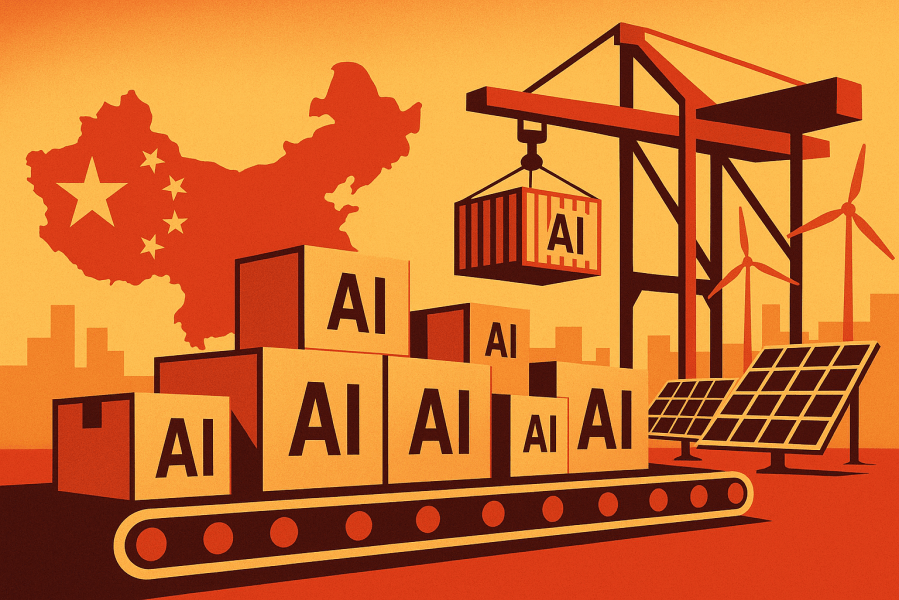
China’s tech industry is currently experiencing an unprecedented investment boom in the field of artificial intelligence, triggered by the use of the advanced model DeepSeek. Xiaomi plans to invest over RMB 7 billion in AI innovation and China Unicom announced RMB 55 billion of investment, with a significant proportion going to AI-driven telecommunications infrastructure modernization.… Continue reading Chinese AI Oversupply
Category: Compliance

Outflow of Intellectual Capital from China
The business model has been highly profitable: foreign companies invest in China, take advantage of its low-cost resources, and then export their products worldwide with attractive margins. In the eyes of the Chinese government, a similar pattern is now emerging in research and development—foreign companies are tapping into China’s knowledge resources through their R&D centers… Continue reading Outflow of Intellectual Capital from China

Labeling Requirements for AI-Generated Content
The Cyberspace Administration of China, the Ministry of Industry and Information Technology, the Ministry of Public Security, and the National Radio and Television Administration have jointly issued new regulations introducing mandatory labeling for AI-generated content. These measures will take effect on September 1, 2025, and require platforms to clearly mark content created by AI systems.… Continue reading Labeling Requirements for AI-Generated Content
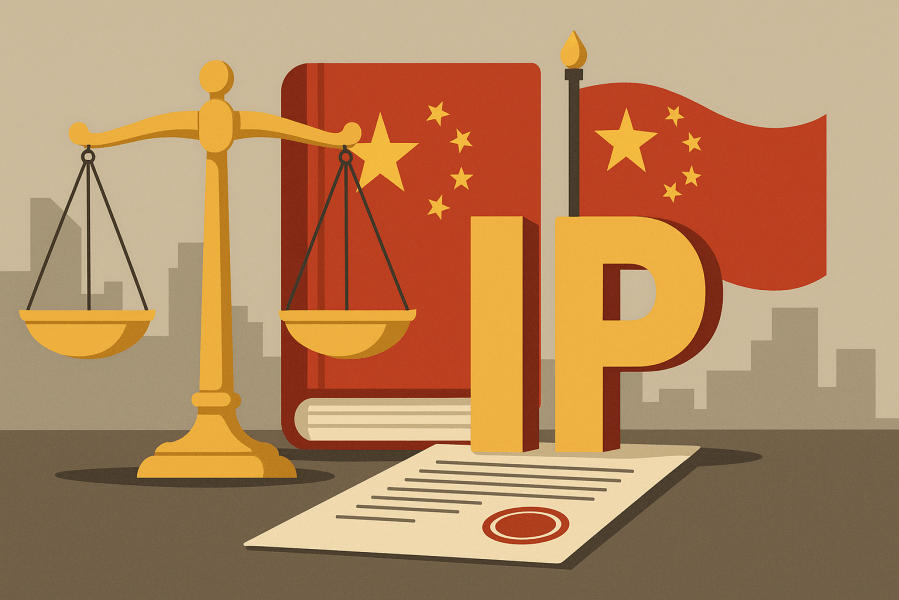
China’s New IP Regulation
China has issued a State Council regulation on the handling of foreign-related disputes in the field of intellectual property (IP), providing a framework for managing such disputes. With this new regulation, China has created a markedly more protectionist legal environment that goes far beyond traditional issues of industrial property rights. The regulation explicitly defines IP… Continue reading China’s New IP Regulation

Taiwan: Burden of Proof Regarding the State of the Art
In a recent decision (2023 Xing Zhuan Su Zi No. 16), the Intellectual Property Court of Taiwan set important standards regarding the burden of proof in assessing inventive step and the admissibility of supplementary experimental data. The case concerned Taiwanese Patent No. I682882, which describes a biodegradable composition. The patent holder faced an invalidation action… Continue reading Taiwan: Burden of Proof Regarding the State of the Art

New Regulations for Data Audits
On February 14, 2025, the Cyberspace Administration of China (CAC) published the Administrative Measures for Compliance Audits on the Protection of Personal Data, which will come into effect on May 1, 2025. The new regulations apply to all companies in China that process personal data and define clear requirements regarding the frequency of self-assessments as… Continue reading New Regulations for Data Audits

Certification Marks Secure Trust in China
A certification mark does not serve to distinguish a company from its competitors but guarantees specific quality characteristics of goods or services. Examples include the Fairtrade seal, which ensures fair trading conditions for producers, or the TÜV mark, which confirms safety and quality testing by TÜV. The Blue Angel, which stands for environmentally friendly products,… Continue reading Certification Marks Secure Trust in China

AI Algorithms for Deepfakes
China has approved 487 new artificial intelligence (AI) algorithms that can be used for deepfake technologies. These approvals pertain to products from leading Chinese technology companies such as Baidu, Alibaba, and Tencent, as well as foreign firms like Hewlett-Packard. The list, the second largest since the relevant regulation came into effect in January 2023, was… Continue reading AI Algorithms for Deepfakes

Legal tech boosts the Resilience
Given the declining Chinese economy, politically induced increasing uncertainty, and the decoupling of IP systems between China and the West, the use of Legal Tech in the field of intellectual property often proves to be a significant advantage for companies. Legal Tech not only reduces costs, increases efficiency, and speeds up processes, but it also… Continue reading Legal tech boosts the Resilience
Cyber Defense with AI
The use of AI by cyber attackers intensifies the threat landscape, particularly concerning China. New tactics, increased complexity of attacks, and lower entry barriers raise the likelihood of attacks. Attacks on login credentials, cloud infrastructures, and shorter breakout times demand faster responses. AI-based systems offer immense advantages in detecting and defending against cyber attacks. Tools… Continue reading Cyber Defense with AI

 China Intellectual Property Blog