The business model has been highly profitable: foreign companies invest in China, take advantage of its low-cost resources, and then export their products worldwide with attractive margins. In the eyes of the Chinese government, a similar pattern is now emerging in research and development—foreign companies are tapping into China’s knowledge resources through their R&D centers… Continue reading Outflow of Intellectual Capital from China
Category: Innovation

Proxy cyberwarfare with AI agents
The risk that autonomous AI agents will independently detect vulnerabilities and exploit them as attack vectors is no longer a futuristic scenario – it has become a tangible and rapidly escalating threat. Unlike traditional tools for automated vulnerability scanning, modern AI agents like AutoGPT or SWE-agent operate with a high degree of autonomy. They can… Continue reading Proxy cyberwarfare with AI agents

Leveraging Open Source in China
Open-source technologies are freely available in China, even for European companies. However, to truly benefit from developments in the Chinese open-source ecosystem, European firms must actively engage with the community, establish collaborations, and leverage the expertise of Chinese specialists. This presents a significant opportunity, particularly for medium-sized enterprises, to catch up technologically and enhance their… Continue reading Leveraging Open Source in China

Open source AI at Alibaba
At this year’s Apsara Conference, the Alibaba Group presented its largest open-source initiative to date, with a focus on the development of artificial intelligence (AI). The company released more than 100 new large language models (LLMs) that are available as open source. These models, known as Qwen 2.5, are expected to be widely used in… Continue reading Open source AI at Alibaba

Renaissance of Industrial Espionage
The tech-decoupling driven by geopolitical factors, economic weakness within the country, and efforts to enhance China’s international competitiveness will lead to an increase in Chinese industrial espionage against Western companies and scientific institutions – particularly in Germany. China feels compelled to move up the value chain, create new growth drivers through innovation, and achieve technological… Continue reading Renaissance of Industrial Espionage
China’s Competitive Advantages in Artificial Intelligence
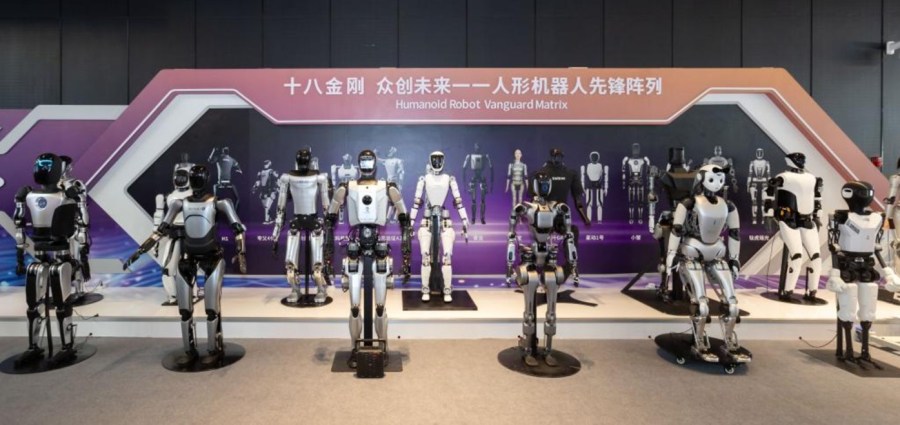
China is emerging as a leading player in many areas of AI. This was demonstrated by the recent World AI Conference 2024 held in Shanghai, where the latest advancements in AI technology were showcased, including the large language model Novel 5.5. The Asian country continues to cooperate intensively with the USA in this field. According… Continue reading China’s Competitive Advantages in Artificial Intelligence

Cultural adaptation in the virtual space
The virtual space opens up completely new ways for companies in China to communicate, but it also requires a deep understanding of the cultural nuances that shape interactions. There are many critical factors that influence success in this environment – from the choice of avatar attire to the meaning of numbers and colors. Avatar clothing… Continue reading Cultural adaptation in the virtual space

Boost for the digital economy
In order to further open up and accelerate trade in services, Shanghai wants to facilitate the cross-border transfer of financial data as part of a new plan. Financial institutions are now allowed to transfer data abroad that is necessary for their daily operations. In order to promote and regulate cross-border data flow, a data catalog… Continue reading Boost for the digital economy

Data as intellectual property
Data and intellectual property are closely linked in various ways. For example, data resulting from creative processes can be protected as intellectual property (data IP). On the other hand, for example, the term of protection of a patent, the number of the subclass of a trademark or the place of jurisdiction of an infringement suit… Continue reading Data as intellectual property

China’s AI verdict will change the markets
The ruling made headlines: Beijing’s Internet Court has ruled in a landmark judgment that AI-generated images can be copyrighted because they reflect the creative contribution of humans. The parameters of the AI set by humans make the end result worthy of copyright. This surprising decision, which deviates massively from Western case law, offers new perspectives… Continue reading China’s AI verdict will change the markets